Kenya has a wide range of habitats for photographing birds of prey. Many travelers start with the big-five parks, but raptors often show better around lakes and dry-country reserves. This kenya safari raptor photography guide focuses on a practical route through those places, with honest notes on seasons, camera settings, and ethics.
Where Should Your Kenya Safari Raptor Photography Guide Take You?
Choose Lake Baringo for variety, owl and eagle opportunities, Lake Nakuru for fish eagles and wetland species, and Maasai Mara for secretary birds, vultures, and open-plains raptors. Samburu and Laikipia add dry-country eagles and riverine species. A mixed itinerary is stronger than relying on the Mara alone.
The table below compares six destinations by habitat, likely raptors, and the best photography window.
| Destination | Habitat | Raptors to expect | Best photographic window |
|---|---|---|---|
| Lake Baringo | Acacia woodland, cliffs, lake shore | Eagles, hawks, owls, and fish eagles | Drier months around June to October; migrants from November to March |
| Lake Nakuru National Park | Alkaline lake, acacia woodland | African fish eagle, vultures, kites | June to October for dry access; January and February can be quieter |
| Nairobi National Park | Open grassland, scattered acacia | Augur buzzard, black-shouldered kite, secretary bird | June to October; a useful short stop near the city |
| Maasai Mara | Open grassland, riverine woodland | Secretary bird, vultures, eagles, harriers | July to October for dry-season action |
| Samburu National Reserve | Arid riverine woodland, rocky hills | Martial eagle, fish eagle, vultures | June to October; January and February are also reliable |
| Laikipia conservancies | Escarpments, woodland, open plains | Eagles, falcons, vultures | June to October, with lower vehicle density |
Not every destination works the same way. Lake Baringo birding rewards patience and a willingness to spend time along the shoreline. Lake Nakuru can be busy with tourists, but the fish eagles often perch close to the road. Nairobi National Park is useful for a short shoot near the city. In the Mara, vultures and secretary birds appear in open grassland, often away from big herds. Samburu and Laikipia are better for dry-country species and quieter mornings. If you like the idea of dry-country photography, a four-day Samburu safari itinerary pairs riverine woodland with open savanna. It also gives you a chance to photograph species that are rare in the Mara. The rest of this kenya safari raptor photography guide explains how to match those places to your gear and style.
What Raptor Species and Behaviors Should You Look For?
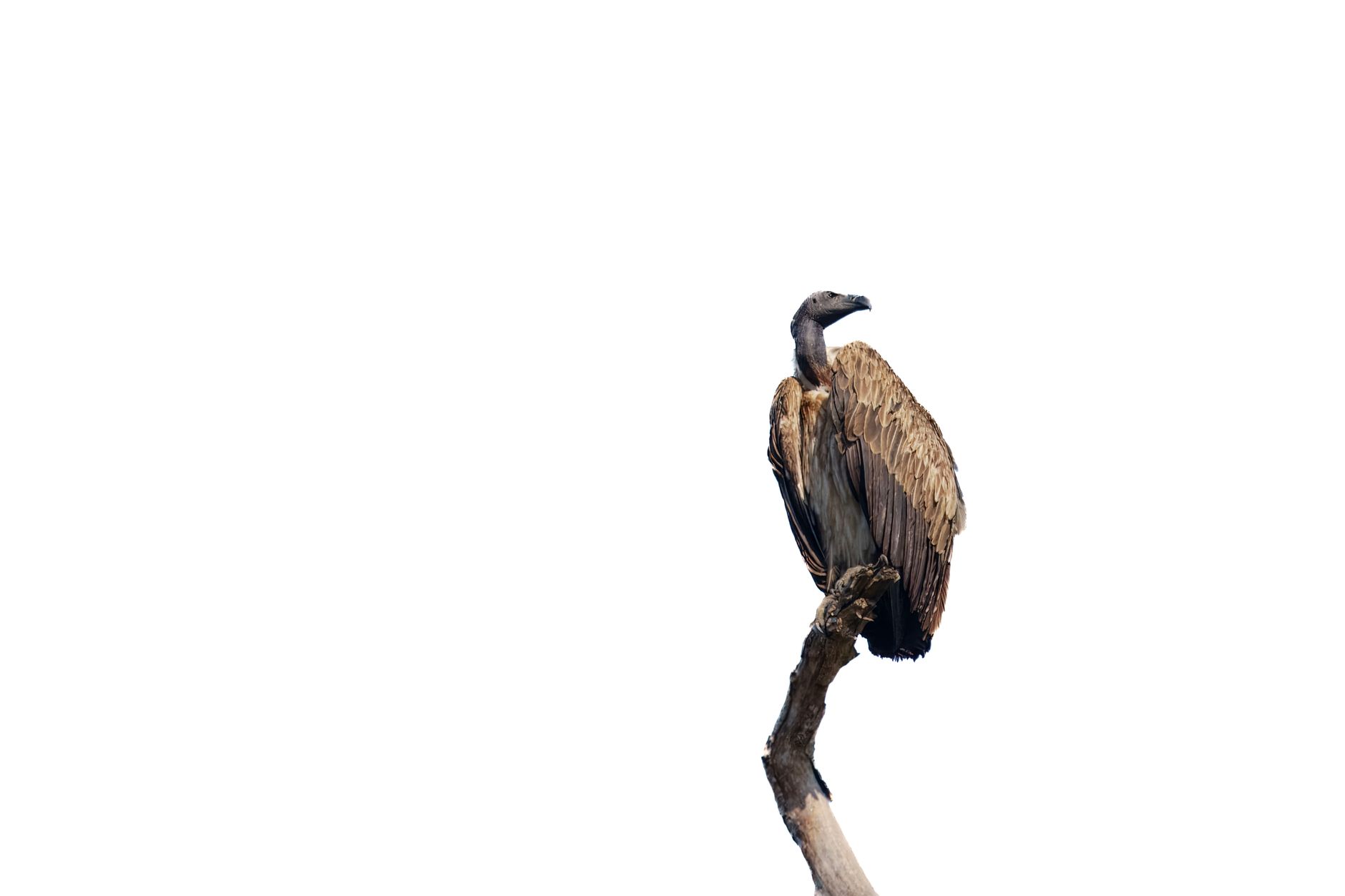
Expect African fish eagles near lakes and rivers, secretary birds walking open grasslands, vultures around feeding activity, and eagles, kites, harriers, and falcons across savanna and woodland. Watch for crouching, leaning forward, or pre-flight defecation: these cues can signal that a perched bird is about to launch.
Behavior matters more than gear. A perched raptor often gives you several seconds of warning before takeoff. Watch the body, not just the head. When the wings open slightly and the bird leans forward, start shooting. For African fish eagle photography, arrive at a lake or river at dawn. Eagles use exposed perches near the water, and the low light helps separate the bird from the background.
When Is the Best Time of Year and Day for Raptor Photography?
Photograph raptors during the first and last hours of daylight, when low-angle light reveals feather detail and reduces harsh shadows. June to October generally improves visibility in many safari areas, while November to March brings Palearctic migrants. Wet-season cloud can create softer light, but roads and access may be less predictable.
The bigger seasonal question is roads. In the wet season, some tracks become slippery and may close. That can block access to good raptor perches even when the light is beautiful. Cloud cover in the wet season is useful for soft, even light, but you need a flexible itinerary. If you want fewer cars, Kenya’s shoulder-season wildlife can be a strong choice, particularly in January and February.
What Camera Gear and Vehicle Setup Do You Need on Safari?
A 100-400mm or 150-600mm zoom is usually more versatile than a fixed super-telephoto because birds can approach quickly. Use a second body with a 70-200mm lens if possible, support the long lens with a beanbag on the vehicle, and carry spare batteries, large memory cards, and dust protection.
Do not overpack gear. On a safari vehicle, space is limited. A single long zoom and a second body will cover most situations. Keep your long lens mounted on one body and your shorter lens on another. That way you can switch quickly when a raptor flies close. A beanbag is better than a tripod because it sits on the vehicle and absorbs vibration.
What Camera Settings Work Best for Raptors?
For flight, start around 1/1600 to 1/2500 second, continuous autofocus, burst mode, and Auto ISO with a controlled maximum. Use approximately f/5.6 to f/8 when enough light allows, especially for wingspan sharpness. For perched birds, lower the shutter speed as light falls, but keep the eye critically sharp.
| Situation | Shutter speed | Autofocus | Aperture |
|---|---|---|---|
| Perched bird | 1/500 second or faster | Single or continuous | f/5.6 to f/8 |
| Bird in flight | 1/1600 to 1/2500 second | Continuous | f/5.6 to f/8 when light allows |
| Group of vultures | 1/1000 to 1/1600 second | Continuous | f/8 for more depth |
These safari photography settings are starting points, not fixed rules. A slow-moving vulture does not need the same shutter speed as a fast falcon. If the bird is perched, your main job is a sharp eye. If the bird is flying, tighten the autofocus area around the head and keep the shutter speed high enough to stop the wings.
How Do You Get Sharper Flight Photos from a Safari Vehicle?
Track the bird before it takes off, leave space in front of its flight direction, and begin the burst just before launch. Ask the guide to position the vehicle with the light behind or beside you, then pan smoothly with birds flying parallel to the vehicle. Predict movement from wind, feeding patterns, and known perches.
Panning takes practice. Start your pan before the bird enters the frame and continue after your final shot. Keep both elbows braced on the window or roof. If the light is harsh, wait until the bird banks and the wings are more open. Smooth motion prevents camera movement from ruining a sharp image.
Vehicle rules matter, especially in the Mara. Ask your driver about local track rules before you request a position change. Masai Mara safari rules and permits explain the basics, and it is smart to read them before you travel.
How Can You Photograph Raptors Ethically on Safari?
Treat the bird’s comfort as the limit of the photograph: never approach nests closely, flush a perched raptor, or pressure a guide to force flight. Keep noise low, switch off the engine when safely parked, maintain distance with a long lens, and avoid disrupting feeding or breeding behavior. Ethical practice protects both subjects and future sightings.
Do not offer food to attract birds. It can teach raptors to associate people with meals, which leads to dangerous behavior. Keep a safe distance from active nests. Some species, including crowned eagles and fish eagles, are sensitive to repeated disturbance. If a bird calls repeatedly or moves away, that is your sign to move on. Kenya birds of prey may look bold, but they are still sensitive to pressure.
What Are the Most Frequently Asked Questions About Raptor Photography in Kenya?
Where is the best place to photograph raptors in Kenya?
Lake Baringo is one of the strongest choices for raptor variety, including owls and eagles, while Lake Nakuru and Lake Naivasha are useful for African fish eagles near water. Maasai Mara, Samburu, and Laikipia add open-country raptors and secretary birds. The best destination depends on whether the priority is species variety, flight action, or safari scenery.
What birds of prey can you photograph on a Kenya safari?
Common possibilities include African fish eagles, vultures, kites, harriers, falcons, snake eagles, other eagles, and secretary birds. Species vary by habitat: lakes and rivers favor fish eagles, while open grassland and dry-country areas produce different hunting and soaring opportunities.
What is the best time of year for bird photography in Kenya?
June to October often provides clearer visibility and concentrated wildlife activity, while November to March is valuable for Palearctic migrant species. January and February can offer strong game viewing with fewer visitors in some areas. Rain can complicate roads, but overcast conditions may produce flattering, diffuse light.
What camera settings are best for photographing birds in flight on safari?
Use continuous autofocus, burst mode, Auto ISO, and a shutter speed of roughly 1/1600 second or faster for many flying raptors. Faster birds may require 1/2500 second or more. Select an aperture around f/5.6 to f/8 when light permits, and prioritize a sharp eye over perfectly sharp wing tips.
Is it ethical to approach raptor nests on safari?
No. Photographers should not approach nests closely, flush adults, or ask guides to disturb birds for a better image. Keep a respectful distance, minimize noise, and use a long lens; disturbance can cause birds to abandon feeding or breeding sites.
How Do You Plan a Raptor Photography Safari in Kenya?
A strong plan pairs two habitats, such as Lake Baringo with the Mara or Samburu with Laikipia. You can build a route through the destinations above and use the seasonal table to pick dates. To compare safari operators and browse packages that include these regions, visit FindMySafari, Valley Safaris, or Trunktrails Safaris.
Where Can You Find More Safari Planning Resources?
- Kenya safari packages from SafariPure
- Kenya wildlife tours from Trunktrails Safaris
- Best time to visit Kenya month-by-month map from Valley Safaris
- Camera advice for your first safari, on FindMySafari